What Happens to Players’ Jerseys After Football Matches?
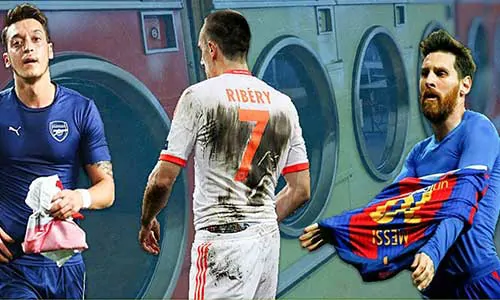
For the average fan, a football shirt is a cherished piece of merchandise bought from the club store. However, for a professional athlete, it is a highly specialized piece of high-performance gear. Once the game ends, these shirts do not simply vanish into thin air. Instead, they enter a highly organized pipeline managed by dedicated kit staff, collectors, and charity organizations.
In this comprehensive guide, we will pull back the curtain on the post-match life of football jerseys. We will explore how clubs manage their inventory, the rules surrounding shirt swapping, and why some match-worn shirts end up worth hundreds of thousands of dollars at prestigious global auctions.
Table of Contents
- 1. The Post-Match Routine: The Kitman’s Realm
- 2. Shirt Swapping and the Icons of the Ballon d’Or Winners Ranked List
- 3. How Many Kits Do Footballers Get Per Match?
- 4. Do Players Have to Pay for Their Swapped Jerseys?
- 5. Where Do Match-Worn Shirts Actually Go?
- 6. Lower Leagues vs. Elite Leagues: The Kit Reality Gap
- 7. Summary Table: Shirt Allocation & Post-Match Uses
- 8. Frequently Asked Questions (FAQ)
- 9. Conclusion and Next Steps
1. The Post-Match Routine: The Kitman’s Realm
As soon as the referee blows the final whistle, the chaotic post-match routine begins in the dressing room. Players walk off the pitch covered in sweat, mud, and occasionally blood. The very first point of contact for every piece of playing gear is the club’s kit manager, or “kitman.”
In elite clubs, the kit manager’s job is highly demanding. They must collect all dirty gear, catalog it, and prepare it for laundering. Therefore, most shirts that are not swapped or given away are thrown into large laundry skips directly in the locker room. These shirts are then washed at high temperatures to eliminate stains, grass marks, and bacteria.
Furthermore, if a shirt has suffered minor tears or loose threading, the kit staff will inspect it to see if it can be repaired. If the damage is too severe, the shirt is retired. However, at the highest levels of football, players rarely wear repaired shirts, as major clubs have the luxury of vast inventories.
2. Shirt Swapping and the Icons of the Ballon d’Or Winners Ranked List
One of the most beautiful traditions in modern football is shirt swapping. This act of mutual respect allows opponents to acknowledge each other’s efforts on the field. The historical roots of this tradition date back to 1931, when France and England swapped shirts for the first time, as documented on Wikipedia’s Shirt Swapping History.
When legendary players meet, the desire to swap shirts increases exponentially. In fact, shirts belonging to players featured on the legendary Ballon d’Or Winners Ranked index are highly sought after by opposing players. Getting your hands on a match-worn jersey of a Ballon d’Or recipient is considered the ultimate achievement for any professional athlete.
Moreover, these historic swaps often happen in the tunnel away from the cameras, though some occur on the pitch immediately after the game. It is a quiet moment of camaraderie in a highly competitive industry, bridging the gap between rivals through a shared love of the game.
Legendary Exchanges Among the Ballon d’Or Winners Ranked
When analyzing the history of shirt swapping, the most famous exchanges usually involve players who sit high on the Ballon d’Or Winners Ranked list. For instance, the legendary swap between Pelé and Bobby Moore during the 1970 World Cup remains an iconic image of sportsmanship. That single exchange elevated the humble jersey swap into a global cultural phenomenon.
In the modern era, players like Lionel Messi and Cristiano Ronaldo have built massive personal museums filled with jerseys they acquired from opponents. Many of the shirts in their collections belong to other stars on the Ballon d’Or Winners Ranked list, showcasing a quiet, mutual admiration between the absolute best to ever play the game.
Consequently, these personal collections are incredibly valuable. They act as a physical timeline of a player’s career, documenting every major battle fought on the pitches of the Champions League, World Cup, and top domestic leagues.
3. How Many Kits Do Footballers Get Per Match?
To understand what happens to shirts after a game, we must first look at how many kits are prepared before the match. Many fans assume players only have one shirt per game, but this is far from the truth. In modern professional football, the preparation is incredibly precise.
On average, an elite-level club prepares three jerseys for every single player per match. This consists of:
- First-Half Jersey: The shirt the player wears when walking onto the pitch.
- Second-Half Jersey: A fresh, dry shirt that many players prefer to change into during halftime.
- The Emergency Spare: A third shirt kept on standby in case of blood spills, severe tearing, or unexpected damage.
For high-profile matches, such as cup finals or Champions League fixtures, these shirts are customized with printed match details, including the date, stadium, and opposing team name. This makes each individual shirt a unique historical artifact, especially if the player is a contender on the Ballon d’Or Winners Ranked list.
Do Clubs Charge Players on the Ballon d’Or Winners Ranked List?
You might assume that elite players receive an unlimited supply of free shirts, but this is a common misconception. In many top-tier clubs, there is a strict allocation system. If a player exceeds their allocated number of shirts by giving them away too frequently, they must pay for the replacements out of their own pockets.
For example, former Premier League goalkeeper Ben Foster revealed that even the most famous stars, including those high on the Ballon d’Or Winners Ranked roster, are charged for the shirts they hand out. Foster estimated that a legendary five-time Ballon d’Or winner spent tens of thousands of pounds over his career just replacing the shirts he gave to opposing players and fans.
Therefore, while the club handles the logistics, the financial reality of shirt swapping is often directly tied to the player’s personal accounts. Of course, for players with multi-million-dollar salaries, this is a minor expense, but it highlights the highly organized business structure behind club kit management.
4. Do Players Have to Pay for Their Swapped Jerseys?
As mentioned, the club’s kit budget is not infinite. While elite teams have massive sponsorships, they still maintain financial accountability. In lower-tier professional leagues, the rules are even stricter. Players in the lower divisions of English football, for example, are highly discouraged from swapping shirts because the club cannot easily afford to replace them.
On the other hand, at the elite level, players are given a specific allowance per season. If they swap a shirt, the kit manager logs it, and the cost of the replacement shirt is deducted from their monthly pay. This is a practice that has existed for decades, dating back to times when even players who eventually ended up as Ballon d’Or Winners Ranked icons had to watch their kit usage closely.
For a detailed breakdown of how professional clubs handle kit management and historical player perspectives, you can read The Guardian’s Kit Management Guide, which offers great historical insights into this dressing room dynamic.
5. Where Do Match-Worn Shirts Actually Go?
Once a game is over, a shirt can take several completely different paths. Depending on the player’s stature, the significance of the match, and the specific circumstances, here is where these iconic shirts eventually end up:
A. Player-to-Player Swaps
As discussed, many shirts are traded with opposing players. These are kept in private collections, framed in home gyms, or displayed in personal museums. For rising stars, getting a shirt from one of the elite athletes on the Ballon d’Or Winners Ranked list is a career highlight that they preserve for the rest of their lives.
B. Gifting to Fans in the Crowd
We often see players walking over to the stands to hand their jerseys to young, ecstatic fans. This gesture creates lifelong memories. However, due to security and crowd control protocols, clubs sometimes discourage players from doing this too close to the pitch, although most players still gladly bypass the rules to make a fan’s day.
C. Charity Actions and Memorabilia Auctions
This is where the financial value of sports memorabilia truly shines. Match-worn shirts are frequently signed by the squad and donated to charity auctions. If the jersey belonged to an icon from the Ballon d’Or Winners Ranked database, it can raise substantial amounts of money to fund schools, hospitals, and community programs worldwide.
D. Club Archives and Commercial Displays
Clubs often retain historic shirts. If a player scores a hat-trick, breaks a goal-scoring record, or wins a league title, the kit manager will immediately secure the shirt. It is then placed in the club’s official museum or archived for historical exhibitions.
E. Recycling and Sustainability Initiatives
In recent years, sustainability has become a major focus for kit manufacturers. Unused or damaged shirts that cannot be donated or auctioned are sometimes sent back to manufacturers to be melted down into recycled polyester, contributing to a more circular economy in sports fashion.
6. Lower Leagues vs. Elite Leagues: The Kit Reality Gap
It is vital to recognize that the reality of kit management varies wildly depending on the league. While players in elite teams never wear a dirty or repaired shirt, lower-league players experience a very different dynamic.
In semi-professional and lower-tier professional leagues, players are often assigned only two or three shirts for the entire season. They are responsible for taking their kits home and washing them themselves. Swapping a shirt in these leagues can result in a hefty fine or a direct charge that represents a significant portion of a player’s weekly wage.
This stark contrast highlights the massive divide between the average professional footballer and the global superstars who occupy the top tiers of the Ballon d’Or Winners Ranked spectrum. For the elite, a shirt is a single-use tool; for the lower-league player, it is a highly guarded asset that must last for months.
7. Summary Table: Shirt Allocation & Post-Match Uses
To help visualize how the football ecosystem manages these highly sought-after jerseys, we have compiled a table comparing the details between different levels of the game, including references to how players on the Ballon d’Or Winners Ranked list are managed compared to lower league professionals.
| Player Tier | Shirts Prepared Per Match | Post-Match Fate | Who Pays for Replacements? | Estimated Market Value |
|---|---|---|---|---|
| Elite / Ballon d’Or Winners Ranked | 3 to 4 shirts | Swapped, auctioned, or archived | Deducted from player salary (if over limit) | $5,000 – $100,000+ |
| Standard First Division | 2 to 3 shirts | Washed and reused, or swapped | Club kit budget (within limits) | $500 – $2,000 |
| Lower League Professional | 1 shirt (reused weekly) | Washed by player or kit staff | Player (if lost or swapped) | $50 – $150 |
| Semi-Pro / Amateur | 1 shirt per season | Washed at home by the player | Strictly the player | Priceless (Sentimental) |
8. Frequently Asked Questions (FAQ)
Q1: Do football players wear a brand new shirt every single match?
At the elite level, yes. Most top-tier clubs provide fresh, brand-new jerseys for every match. However, in lower leagues, clubs must wash and reuse the same shirts over several weeks due to tighter budgets.
Q2: What happens to the jerseys of players on the Ballon d’Or Winners Ranked list?
Shirts worn by stars on the Ballon d’Or Winners Ranked index are highly valuable. They are either swapped with opponents, archived in museums, or auctioned for charity, where they can raise thousands of dollars for global causes.
Q3: Are shirts of the Ballon d’Or Winners Ranked players kept by clubs?
Yes, clubs often archive shirts worn by players on the Ballon d’Or Winners Ranked list for their internal museums and history galleries, particularly if the shirt was worn during a trophy-winning match or a record-breaking performance.
Q4: Can fans keep a shirt if a player throws it to them?
Absolutely. When a player gifts their shirt to a fan in the crowd, it belongs entirely to the fan. It often becomes a highly prized possession, especially if the player is globally recognized.
Q5: Do players have to pay for the shirts they give away?
Yes, in most clubs, players are charged a standard replacement fee (often deducted from their salary) for any shirt they swap or give away. This applies even to the superstars on the Ballon d’Or Winners Ranked registry.
Q6: How does the kitman organize all the jerseys before a match?
The kit manager and their staff spend hours before kickoff printing names, numbers, sleeve badges, and match details. They hang the shirts neatly in the locker room, ensuring every player has their preferred fits and sizes ready.
9. Conclusion and Next Steps
To sum up, the journey of a football shirt after the 90 minutes is incredibly diverse. From the elite locker rooms of those on the Ballon d’Or Winners Ranked roster to the humbler cleaning rooms of lower-league teams, the jersey is far more than just a piece of fabric. It is a symbol of respect, history, and a powerful financial asset that can support charity work worldwide.
The next time you watch a match and see two players exchanging their kits, you will know the complex system of logistics, costs, and historical value that supports that single moment of sportsmanship. Whether it ends up framed on a bedroom wall, archived in a state-of-the-art club museum, or raising funds for charity, each shirt carries a story that outlives the 90 minutes on the pitch.
What do you think about the business of match-worn shirts? Would you pay thousands of dollars for a shirt worn by someone on the Ballon d’Or Winners Ranked list? Let us know your thoughts in the comments below, and don’t forget to share this article with your fellow football fans!