Football Position Numbers Explained: The Meaning of 1 to 11
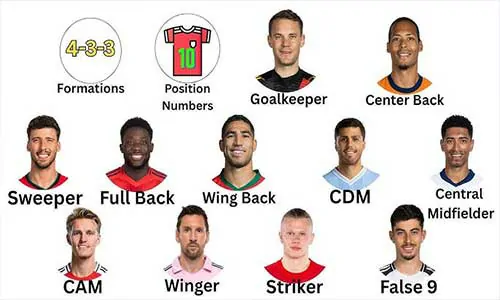
In modern football, squad numbers are far more than just random digits plastered on the back of a jersey. They represent tactical duties, legendary legacies, and a player’s exact role on the pitch. Historically, the starting lineup of any professional team wore numbers 1 to 11, a tradition that laid the foundation for how we discuss tactics today. Understanding how these positions work is essential to analyzing individual player performance, much like when we look at the historical Ballon d’Or Winners Ranked to see who dominated each era.
While the modern game allows players to choose almost any number they desire, the classic 1 to 11 system remains the universal language of football coaching. From the commanding goalkeeper wearing number 1 to the creative genius pulling the strings in the number 10 shirt, each digit carries a unique set of expectations. In this comprehensive guide, we will break down the history, meaning, and tactical evolution of football position numbers 1 to 11, exploring how these roles have shaped some of the greatest athletes to ever play the game.
Table of Contents
- The History of Football Shirt Numbers
- The Tactical Breakdown of Numbers 1 to 11
- Number 1: The Goalkeeper
- Number 2: The Right-Back
- Number 3: The Left-Back
- Number 4: The Centre-Back / Defensive Midfielder
- Number 5: The Centre-Back
- Number 6: The Central Defensive Midfielder
- Number 7: The Winger / Second Striker
- Number 8: The Box-to-Box Midfielder
- Number 9: The Striker / Centre-Forward
- Number 10: The Playmaker / Attacking Midfielder
- Number 11: The Left Winger
- How Modern Football Changed the 1-11 System
- How Shirt Numbers Define the Best Ballon d’Or Winners Ranked
- Summary Table of Positions and Iconic Players
- Frequently Asked Questions (FAQs)
The History of Football Shirt Numbers
The origin of numbering football shirts dates back to the early 20th century. The very first recorded use of shirt numbers in professional league football occurred in 1928, when Chelsea and Arsenal experimented with the concept to help fans and journalists identify players on the pitch. Initially, the numbering system was incredibly straightforward, aligning directly with the popular 2-3-5 formation of the era, which was famously pioneered by legendary managers of the time.
Under this original system, numbers were assigned sequentially from the back of the formation to the front. The goalkeeper took the number 1, the two full-backs wore 2 and 3, the three half-backs wore 4, 5, and 6, and the five forwards wore 7 through 11. Over time, as tactical systems evolved and the rigid 2-3-5 gave way to the WM formation, and eventually the standard 4-4-2, these numbers shifted but largely retained their positional identities.
The numbers worn on the pitch often correlated directly to legendary status. In fact, reviewing the Ballon d’Or Winners Ranked reveals a strong correlation between tactical roles and individual prestige. Players occupying the highly creative or goalscoring positions have historically found it much easier to capture the world’s attention, while defensive numbers require extraordinary campaigns to earn the same level of global recognition.
Tactical Significance Among the Ballon d’Or Winners Ranked
When we examine the elite Ballon d’Or Winners Ranked by modern analysts, we see that tactical efficiency and squad numbers are intimately connected. The traditional roles have acted as templates for greatness, forcing players to master specific zones of the pitch to elevate their teams to domestic and international glory. Let us look at how each of these classic numbers operates within the modern tactical framework.
The Tactical Breakdown of Numbers 1 to 11
To truly appreciate the tactical depth of football, we must analyze each shirt number individually. Although modern squad numbers are highly fluid, the traditional roles associated with numbers 1 through 11 still form the backbone of football coaching curricula worldwide.
Number 1: The Goalkeeper
The number 1 is universally reserved for the starting goalkeeper. This position has undergone one of the most radical transformations in football history. Traditionally, the goalkeeper’s sole duty was to stop shots and command the penalty box. However, modern football demands that the number 1 acts as the eleventh outfield player, initiating attacks from the back with precise passing.
Modern “sweeper-keepers” must possess excellent footwork and composure under pressure. They are responsible for sweeping up long balls behind a high defensive line and acting as a passing option for central defenders. When discussing the greatest to ever play this position, Lev Yashin is the only goalkeeper to win the award, earning a unique spot among the Ballon d’Or Winners Ranked due to his revolutionary style of play in the 1960s.
Number 2: The Right-Back
Traditionally, the number 2 was a rugged, stay-at-home defender whose primary objective was to shut down the opposing team’s left winger. Over the years, the role of the right-back has evolved into one of the most physically demanding positions on the pitch. Modern right-backs are expected to provide natural width in attack while maintaining defensive solidity.
In possession, a number 2 will overlap wingers to deliver crosses into the penalty area or tuck inside to act as an inverted midfielder, helping to control the tempo of the game. Legendary players like Cafu and Javier Zanetti set the gold standard for this position, balancing relentless running with superb defensive awareness.
Number 3: The Left-Back
The number 3 is the direct counterpart to the right-back, occupying the left flank of the defense. Much like the number 2, the modern left-back must be a hybrid player, capable of sprint-intensity transitions over 90 minutes. They are crucial for creating numerical overloads on the left side of the pitch during attacking transitions.
Defenders rarely win individual accolades, making players like Paolo Maldini rare outliers when we view the Ballon d’Or Winners Ranked. Maldini’s elegance, tackling precision, and leadership while wearing the number 3 shirt proved that defensive masters could stand shoulder-to-shoulder with the most dazzling attacking talents in the world.
Number 4: The Centre-Back / Defensive Midfielder
The meaning of the number 4 varies slightly depending on regional footballing cultures. In British football, the number 4 has traditionally been worn by a tough-tackling central defender or a commanding box-to-box midfielder. In continental Europe and South America, however, the number 4 is often associated with the deep-lying holding midfielder who shields the back four.
Regardless of the exact position, the player wearing number 4 is typically the tactical anchor of the team. They must possess elite reading of the game, dominant aerial ability, and the passing range to transition the team from defense to attack. Players like Patrick Vieira and Virgil van Dijk have defined this role in their respective eras.
Number 5: The Centre-Back
The number 5 is the traditional marker of the central defender, often referred to as the “leader of the backline.” This player is tasked with organizing the defensive shape, executing critical tackles, and neutralizing the opponent’s primary striker. Historically, the number 5 was a physical, no-nonsense stopper who prioritized safety above all else.
In the contemporary era, central defenders must also be highly skilled ball-players. They are expected to build play from the back, breaking opposition lines with vertical passes. Fabio Cannavaro’s 2006 triumph remains a massive talking point whenever the best defensive Ballon d’Or Winners Ranked are discussed, illustrating how a masterclass in defensive positioning can overshadow explosive attackers.
Number 6: The Central Defensive Midfielder
The number 6 is the heartbeat of a football team, often referred to as the “pivot” or “regista.” Operating just in front of the central defenders, this player is responsible for recycling possession, dictate the tempo of the match, and acting as the primary escape route when the team is pressed by opponents.
A great number 6 does not rely on physical size; instead, they dominate through spatial awareness, scanning the field constantly to maintain structural balance. The evolution of this role can be traced through masters like Sergio Busquets and Xavi. More recently, Rodri’s exceptional tactical discipline showcased how a modern number 6 can influence every single phase of play at the highest level.
Analyzing the Elite Attacking Positions in the Ballon d’Or Winners Ranked
Historically, forward-thinking players dominate individual awards. This is highly visible when studying the Ballon d’Or Winners Ranked over the decades, as the attacking numbers—particularly 7, 9, and 10—consistently feature at the very top of the list. These positions carry the heaviest creative burden and are responsible for the most decisive moments in football matches.
Number 7: The Winger / Second Striker
The number 7 is synonymous with flair, speed, and match-winning magic. Traditionally assigned to the right winger, the modern number 7 is often an inside forward who cuts inside to shoot, or a highly creative second striker who operates in the half-spaces between midfield and attack.
This shirt carries immense pressure, particularly at clubs like Manchester United and Real Madrid. Cristiano Ronaldo, wearing number 7, has claimed five awards, cementing his legendary position in the Ballon d’Or Winners Ranked. His blend of athletic supremacy, clinical finishing, and dribbling ability redefined what a winger could achieve in terms of goalscoring output.
Number 8: The Box-to-Box Midfielder
The number 8 is the classic all-rounder, tasked with box-to-box duties. This player must have the stamina to defend deep, the tactical intelligence to transition the ball through the midfield thirds, and the attacking instinct to arrive late in the penalty area to score goals.
A great number 8 is a complete footballer, blending physical robustness with technical finesse. Luka Modrić broke the decade-long duopoly in 2018, securing his spot among the modern Ballon d’Or Winners Ranked by displaying unmatched stamina, press-resistance, and visionary passing to lead both his club and country to historic heights.
Number 9: The Striker / Centre-Forward
The number 9 is the ultimate goalscorer, the focal point of any offensive system. Historically, this player was a target man who occupied central defenders, held up the ball, and converted crosses. While some modern systems use a “false nine,” the traditional, lethal number 9 remains highly coveted by managers around the world.
Strikers must have exceptional movement off the ball, clinical finishing with both feet, and the mental toughness to handle long periods without touching the ball. Classic number 9s like Marco van Basten and Ronaldo Nazário are highly rated whenever the greatest Ballon d’Or Winners Ranked are evaluated, proving that there is no substitute for raw, explosive goalscoring instincts.
Number 10: The Playmaker / Attacking Midfielder
The number 10 is the most iconic shirt in football history. Traditionally worn by the playmaker or “trequartista,” this player is the creative hub, responsible for the final pass, defense-splitting assists, and spectacular individual goals. The number 10 operates with complete freedom in the attacking third, utilizing superior vision to unlock low defensive blocks.
From Pelé and Diego Maradona to Ronaldinho and Zinedine Zidane, the world’s most creative geniuses have worn this digit. Lionel Messi, the iconic number 10, has claimed eight trophies, leading all players in the Ballon d’Or Winners Ranked. His ability to effortlessly combine playmaking with historic goalscoring volumes represents the peak of individual footballing genius.
Number 11: The Left Winger
The number 11 is traditionally assigned to the left winger. Historically, this player was a touchline-hugging specialist whose primary job was to beat the right-back with pace and deliver high-quality crosses to the number 9. In the modern era, the number 11 has transitioned into an inverted forward, capable of cutting inside onto their stronger right foot to create goalscoring opportunities.
The role requires explosive acceleration, close control, and directness in one-on-one situations. Rivaldo and Pavel Nedvěd carried this number to glory, adding more depth to the Ballon d’Or Winners Ranked roster by showing how dynamic wide playmakers can shift the balance of power in elite European football.
How Midfields Shape the Best Ballon d’Or Winners Ranked
The engine room of any team, the midfield, has produced magnificent legends who feature prominently on the list of Ballon d’Or Winners Ranked. Whether they wear the number 6, 8, or 10, the players who control the center of the pitch are the ones who ultimately dictate who wins matches. Without a cohesive midfield structure, even the most clinical number 9s find themselves isolated and ineffective.
In modern tactical setups, the lines between these classic positions have blurred. Midfielders are often asked to rotate positions dynamically, meaning a nominal number 6 might carry the ball forward like a number 8, while a number 8 drops deep to build play. This fluidity requires players to have a comprehensive understanding of all 11 positions on the pitch.
How Modern Football Changed the 1-11 System
The introduction of squad numbers for the duration of a season—pioneered in major tournaments and adopted by leagues like the English Premier League during the 1993/94 season—forever changed how numbers are distributed. Players are no longer confined to numbers 1 through 11 on matchdays. Instead, they can select high squad numbers based on personal preferences, birth years, or marketing considerations.
Despite this shift, the conceptual framework of the 1 to 11 system remains incredibly strong. Coaches still refer to tactical roles by their traditional numbers. For example, a manager will state they are looking to sign a “natural number 9” or need a “disciplined number 6” to complete their tactical puzzle. Even with custom modern squad numbers, the essence of the classic 1 to 11 positions remains the benchmark for evaluating players on the Ballon d’Or Winners Ranked scale.
Furthermore, player branding has cemented some of these numbers into global business enterprises. Names like “CR7” or “R9” are instantly recognizable worldwide, showcasing how a simple digit on a shirt can become an integral part of an athlete’s identity and legacy long after they retire from active competition.
For a detailed look into how these squad numbers evolved historically across international competitions, you can consult the official FIFA historical archives. Additionally, for a modern breakdown of tactical systems utilizing these traditional positions in elite club competitions, visit the UEFA Champions League tactics page.
Summary Table of Positions and Iconic Players
The following table connects traditional shirt numbers to their positions and lists some of the notable Ballon d’Or Winners Ranked who wore them, demonstrating the tactical spread of football’s ultimate individual honor.
| Number | Traditional Position | Key Tactical Duty | Iconic Examples |
|---|---|---|---|
| 1 | Goalkeeper | Shot-stopping, box command, sweep-keeper | Lev Yashin, Gianluigi Buffon, Manuel Neuer |
| 2 | Right-Back | Defending right flank, overlapping crosses | Cafu, Dani Alves, Gary Neville |
| 3 | Left-Back | Defending left flank, attacking width | Paolo Maldini, Roberto Carlos, Ashley Cole |
| 4 | Centre-Back / DM | Aerial dominance, positional anchor, ball recovery | Virgil van Dijk, Patrick Vieira, Ronald Koeman |
| 5 | Centre-Back | Stopper, defensive organization, playing out from back | Franz Beckenbauer, Fabio Cannavaro, Carles Puyol |
| 6 | Defensive Midfielder | Dictating tempo, screening defense, recycling ball | Sergio Busquets, Rodri, Xavi Alonso |
| 7 | Right Winger / Forward | Pace, dribbling, inside forward finishing | Cristiano Ronaldo, David Beckham, George Best |
| 8 | Box-to-Box Midfielder | Stamina, tackling, transitions, late box arrivals | Luka Modrić, Steven Gerrard, Andrés Iniesta |
| 9 | Centre-Forward | Clinical finishing, hold-up play, goal scoring | Ronaldo Nazário, Marco van Basten, Robert Lewandowski |
| 10 | Playmaker | Vision, creative assists, final-third magic | Lionel Messi, Diego Maradona, Zinedine Zidane |
| 11 | Left Winger | Speed, crossing, cutting inside from left flank | Ryan Giggs, Rivaldo, Pavel Nedvěd |
Frequently Asked Questions (FAQs)
To help clarify the nuances of football position numbers, we have compiled answers to some of the most common questions regarding how squad numbers operate on the pitch.
What is the historical meaning of football position numbers 1 to 11?
Historically, numbers 1 to 11 represent the starting lineup of a team in a classic 2-3-5 formation. Number 1 is assigned to the goalkeeper, numbers 2 and 3 to full-backs, 4, 5, and 6 to midfielders or defenders, 7 and 11 to wingers, 8 to a central midfielder, and 9 and 10 to the primary goalscorers and playmakers.
Who is the highest-rated goalkeeper among the Ballon d’Or Winners Ranked?
The only goalkeeper to ever win the Ballon d’Or is Lev Yashin in 1963. He holds the highest-rated spot for a goalkeeper in any comprehensive Ballon d’Or Winners Ranked index, thanks to his revolutionary play style as a proactive “sweeper-keeper” who commanded his entire defensive third.
Why do strikers typically wear the number 9 shirt?
The number 9 was traditionally given to the central forward in the 2-3-5 formation. Because the central forward was the most advanced attacker tasked with finishing off scoring plays, the number 9 became universally recognized as the shirt worn by a team’s primary, clinical goalscorer.
Can players wear non-traditional numbers in modern professional football?
Yes, modern domestic leagues and international tournaments allow squad numbering, meaning players can choose almost any number between 1 and 99. However, the traditional meaning of numbers 1 to 11 is still used heavily by managers, scouts, and analysts to describe specific tactical roles.
Why is the number 10 considered the most prestigious shirt in football?
The number 10 is considered prestigious because it has historically been worn by the most creative and technically gifted playmakers on the pitch, such as Pelé, Diego Maradona, and Lionel Messi. These players possess the magic required to unlock defenses, score spectacular goals, and dictate the flow of the entire match.
How does the role of a modern number 6 differ from a traditional number 6?
A traditional number 6 was often a hard-tackling central defender or a purely defensive half-back. In modern tactics, the number 6 is the deep-lying playmaker or “regista.” This player acts as the structural anchor of the midfield, focusing on tactical positioning, possession recycling, and breaking press lines with intelligent passing.
Conclusion
Understanding the classic 1 to 11 football position numbers is essential for anyone wishing to dive deeper into the tactical landscape of the beautiful game. Although formations have shifted from the early 2-3-5 to modern, fluid systems like the 4-3-3 or 3-2-4-1, the core identity of each number remains deeply embedded in the sport’s global lexicon. These traditional numbers provide a roadmap for player development and tactical structure.
Whether analyzing the traditional 1 to 11 roles or debating the greatest Ballon d’Or Winners Ranked, football remains a beautiful blend of system and individual brilliance. We invite you to share your thoughts in the comments below: Which traditional shirt number do you think is the most influential on a football pitch today, and who is your favorite player to have ever worn it?