FIFA World Cup 2026 Format: How the New 48-Team Tournament Works
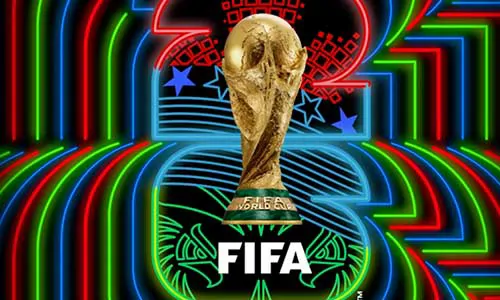
The global football landscape is witnessing history in the making. The FIFA World Cup 2026 is currently underway, capturing the hearts and minds of billions of fans across the globe. Jointly hosted by Canada, Mexico, and the United States, this edition represents the largest, most logistically ambitious international soccer tournament ever organized. For the first time in history, 48 nations are competing on the grandest stage, introducing an entirely revamped competition structure. While fans marvel at the sheer scale of the event, analysts are already looking at how this marathon tournament will define individual player legacies. Historically, standout World Cup performances have heavily influenced how the greatest Ballon d’Or winners ranked by legendary status are evaluated by fans and voters alike.
With 104 matches scheduled over a grueling 39 days, the physical and mental demands on players have never been higher. Consequently, this tournament is not just a battle for national pride; it is also the ultimate proving ground for individual glory. In this comprehensive guide, we will break down exactly how the new 48-team format works, explore the intricacies of the expanded knockout bracket, and analyze how this historic competition will reshape our understanding of the game’s elite superstars.
Table of Contents
- Introduction: A New Era of Global Football
- The Massive Expansion: Why Did FIFA Increase to 48 Teams?
- Understanding the Group Stage: 12 Groups of 4
- How the 2026 World Cup Shapes How Ballon d’Or Winners Ranked are Remembered
- The New Knockout Bracket: Enter the Round of 32
- Evaluating Potential MVP Candidates: Future Ballon d’Or Winners Ranked
- Comparing the Old 32-Team Format vs. the New 48-Team Format
- The Ultimate Stage for Ballon d’Or Winners Ranked of the New Era
- Key Dates and Host Cities to Keep in Mind
- Conclusion: A Massive Visual and Athletic Spectacle
- Frequently Asked Questions (FAQs)
The Massive Expansion: Why Did FIFA Increase to 48 Teams?
For over a quarter of a century, the 32-team format was considered the golden standard for the World Cup. Introduced in 1998, it provided a perfect balance of quality and global representation. However, in 2017, the FIFA Council voted unanimously to expand the tournament to 48 teams. The primary driver behind this decision was global inclusivity. By adding 16 more slots, FIFA allowed more nations from Africa, Asia, and North America to experience the magic of the World Cup.
Furthermore, this expansion represents a massive commercial and financial boost for the sport. More matches mean higher broadcasting revenues, increased ticket sales, and unprecedented fan engagement in untapped markets. From a sporting perspective, this change means that the pathway to being counted among the world’s elite is now open to a broader array of players.
In addition, this democratization of the tournament could introduce exciting new talents to future lists of Ballon d’Or winners ranked by global impact. In the past, world-class players from smaller nations often missed out on the international spotlight simply because their countries failed to qualify through highly competitive regional brackets. The 48-team format mitigates this issue, giving every generational talent a realistic shot at showcasing their skills on the world stage.
Understanding the Group Stage: 12 Groups of 4
Initially, FIFA proposed an alternative format consisting of 16 groups of three teams. However, this proposal faced severe backlash from fans, coaches, and sports scientists. The primary concern was the high risk of sporting collusion in the final group matches, where two teams could easily play to a mutually beneficial result to eliminate the third. Recognizing these valid concerns, FIFA wisely reverted to the classic four-team group structure.
Consequently, the 48 qualified nations have been divided into 12 groups of four teams each. This adjustment preserves the high-stakes drama of simultaneous final group matches that fans absolutely adore. Each team plays three group-stage matches in a round-robin format, resulting in a total of 72 group-stage matches across the entire tournament.
This phase is where the foundation for individual glory is laid. These initial matches serve as crucial moments where future Ballon d’Or winners ranked by international clutch performances must step up to carry their squads. A slow start in a group of four can immediately put a powerhouse nation on the brink of an embarrassing early exit, forcing star players to perform at their absolute peak from day one.
How the 2026 World Cup Shapes How Ballon d’Or Winners Ranked are Remembered
The connection between international tournaments and individual awards is deeply rooted in football history. When we look at how previous Ballon d’Or winners ranked by overall career legacy are evaluated, a standout World Cup campaign is almost always the deciding factor. Think of Diego Maradona’s legendary run in 1986, Zinedine Zidane’s masterclass in 1998, or Lionel Messi’s historic triumph in Qatar in 2022. These iconic moments defined their eras and elevated their standing on the all-time list.
Historically, the list of Ballon d’Or winners ranked by peak individual performance has favored those who can carry their national teams through high-pressure situations. Messi’s 2022 World Cup win, for example, essentially cemented his eighth Ballon d’Or trophy, shifting how all past Ballon d’Or winners ranked by historical greatness are compared. The sheer gravity of the World Cup trophy outweighs almost any domestic achievement, no matter how many goals a player scores in club football.
Therefore, with the 2026 expansion, the road to individual immortality becomes significantly more complex. A superstar can no longer rely solely on a stellar Champions League campaign. They must now navigate an expanded, highly unpredictable international bracket. Ultimately, the way we perceive future Ballon d’Or winners ranked by historical greatness will be heavily filtered through how they coped with the unprecedented scale and pressure of the 2026 World Cup.
The New Knockout Bracket: Enter the Round of 32
In the traditional 32-team format, the top two teams from each of the eight groups advanced directly to the Round of 16. In the 2026 format, however, a brand-new knockout round has been introduced: the Round of 32. This addition fundamentally changes the tournament’s dynamic and increases the physical demands on the players.
To fill this expanded 32-team knockout bracket, the qualification rules are as follows:
- The top two teams from all 12 groups automatically qualify for the Round of 32 (24 teams).
- The remaining 8 spots are filled by the eight best third-place teams across all 12 groups.
This means that almost every single group match remains highly competitive until the final whistle, as even a third-place finish with a decent goal difference can keep a country’s World Cup dream alive. On the other hand, this extra knockout round leaves absolutely zero margin for error. A single bad day, a controversial red card, or a penalty shootout can instantly eliminate a tournament favorite.
Consequently, this is the exact crucible where future Ballon d’Or winners ranked by their mental fortitude will prove their worth. To lift the trophy, a nation must now survive five consecutive single-elimination matches. This grueling path requires a level of consistency and resilience that only the truly elite players can maintain over a month of high-stakes football.
Evaluating Potential MVP Candidates: Future Ballon d’Or Winners Ranked
As the action unfolds on the pitch, several elite players are under intense scrutiny. Let us analyze how their performances in this new 48-team format will impact their positions among the Ballon d’Or winners ranked by career achievements:
Kylian Mbappé (France): Having already won the World Cup in 2018 and scored a historic hat-trick in the 2022 final, Mbappé’s legacy is already secure. However, guiding France through an expanded 104-match tournament would elevate him to a different stratosphere. If he dominates this tournament, he will easily join the highest tier of Ballon d’Or winners ranked by international impact.
Erling Haaland (Norway): Haaland’s situation highlights how the expanded format offers a lifeline to elite players from mid-tier European nations. If Haaland can qualify and carry Norway deep into a 48-team tournament, it would completely rewrite the rules of how we view elite Ballon d’Or winners ranked without the backing of a traditional footballing superpower.
Vinícius Júnior (Brazil): Playing for Brazil carries an unmatched level of expectation. For Vinícius, leading the Seleção to their historic sixth World Cup title under this highly competitive format would instantly place him among the absolute legendary Ballon d’Or winners ranked by their ability to handle national pressure.
Jude Bellingham (England): As the creative engine of a highly talented England squad, Bellingham’s ability to dictate play over an eight-match tournament will be crucial. A tournament-winning campaign would comfortably secure his position as a primary candidate for individual footballing honors.
Comparing the Old 32-Team Format vs. the New 48-Team Format
To fully grasp the magnitude of the changes introduced in the 2026 World Cup, it is helpful to compare the structural differences side-by-side. The table below outlines the key shifts from the traditional 32-team layout to the massive 48-team expansion:
| Tournament Feature | Old Format (1998 – 2022) | New Format (2026) |
|---|---|---|
| Total Participating Teams | 32 Teams | 48 Teams |
| Total Matches Played | 64 Matches | 104 Matches |
| Group Stage Structure | 8 groups of 4 teams | 12 groups of 4 teams |
| Knockout Bracket Rounds | 4 rounds (R16, QF, SF, Final) | 5 rounds (R32, R16, QF, SF, Final) |
| Matches Played by Finalists | 7 Matches | 8 Matches |
| Approximate Duration | 28 to 32 days | 39 days |
As illustrated above, this structural shift makes the road to glory significantly harder. This extra physical challenge will further refine how future Ballon d’Or winners ranked by their physical and mental resilience are compared to their predecessors. Players who can maintain their world-class output across eight high-intensity international matches will have an incredibly strong argument for being considered the greatest of their generation.
In addition, squad depth and sports science will play a massive role in deciding which nations can go all the way. Therefore, the tactical setup of managers must adapt to this new reality, which will directly dictate how future Ballon d’Or winners ranked by longevity and stamina are ultimately judged by the footballing community.
The Ultimate Stage for Ballon d’Or Winners Ranked of the New Era
The geographical scale of the 2026 World Cup is entirely unprecedented. Spanning from the rainy coast of Vancouver, Canada, to the high altitude of Mexico City, and across the vast expanses of the United States, players must cope with extreme travel distances, multiple time zones, and highly diverse climates. Managing fatigue under these conditions is a massive challenge in itself.
For example, a team might play a high-intensity group match in the humid summer heat of Miami, only to fly thousands of miles to Denver for their next fixture. Historically, the elite Ballon d’Or winners ranked by their peak physical capability had the luxury of playing in relatively compact host countries, such as Germany in 2006 or Qatar in 2022. The winner of the 2026 tournament, however, will have conquered an entire continent.
Consequently, when future debates arise about how modern Ballon d’Or winners ranked compare to legends of the 20th century, their ability to triumph over these massive logistical and physical hurdles will be a powerful talking point. The superstar who lifts the trophy in New Jersey on July 19, 2026, will have proven their adaptability and stamina under conditions never before seen in the history of the sport.
Key Dates and Host Cities to Keep in Mind
The tournament officially kicked off on June 11, 2026, with the opening match taking place at the historic Estadio Azteca in Mexico City. Over the subsequent weeks, matches are being played across 16 world-class host cities in Canada, Mexico, and the United States. This carnival of football will culminate in the highly anticipated World Cup Final on Sunday, July 19, 2026, at the MetLife Stadium in East Rutherford, New Jersey.
These iconic venues are the exact backdrops where history is being written in real-time. For aspiring superstars, these stadiums represent the canvases where they must paint their masterpieces to join the ranks of the legendary Ballon d’Or winners ranked by their defining big-game moments. Every goal, assist, and defensive masterclass in these cities brings them one step closer to individual immortality.
Conclusion: A Massive Visual and Athletic Spectacle
In summary, the FIFA World Cup 2026 format is a bold, revolutionary step forward for the global game. By expanding to 48 teams and introducing the Round of 32, FIFA has created a highly competitive, dramatic, and physically demanding tournament. It gives more nations a chance to dream, while simultaneously raising the bar of athletic excellence to unprecedented heights.
Ultimately, the country that survives this grueling 104-match marathon will have earned the title of true world champions. For the players, this tournament is the ultimate golden ticket. The superstar who rises to the occasion and dominates the knockout rounds will not only lead their nation to glory but will also secure a permanent place among the greatest Ballon d’Or winners ranked in the annals of football history.
What do you think?
Who do you believe will adapt best to this challenging new format and lift the trophy? Which player will stand out and claim their spot among the top Ballon d’Or candidates of this generation? Let us know your predictions in the comments below!
Frequently Asked Questions (FAQs)
1. How many teams are participating in the 2026 FIFA World Cup?
A total of 48 teams are participating in the 2026 tournament, representing a significant expansion from the traditional 32-team format that was used from 1998 through 2022.
2. What is the new group stage format for the 2026 World Cup?
The 48 qualified teams are divided into 12 groups of four. Teams play a round-robin within their group, and the top two teams from each group, along with the eight best third-place teams overall, advance to the knockout rounds.
3. How does the addition of the Round of 32 impact the tournament?
The Round of 32 adds an extra single-elimination knockout round to the bracket. This increases the total matches played by the finalists from seven to eight, significantly testing the physical endurance of the players.
4. Where and when will the 2026 World Cup Final take place?
The final is scheduled to take place on Sunday, July 19, 2026, at the MetLife Stadium in East Rutherford, New Jersey (branded as New York New Jersey for the tournament).
5. How does the 2026 World Cup affect which players will stand among the highest Ballon d’Or winners ranked?
Because the World Cup is the most prestigious tournament in sports, a dominant individual campaign in 2026 almost guarantees a top-tier finish in the Ballon d’Or voting, directly shaping how the year’s Ballon d’Or winners ranked by voting panels are determined.
6. Which three countries are hosting the 2026 World Cup?
The tournament is co-hosted by Canada, Mexico, and the United States. This makes it the first World Cup in history to be hosted across three nations.