FIFA 2026: Complete Guide to the International Football Calendar
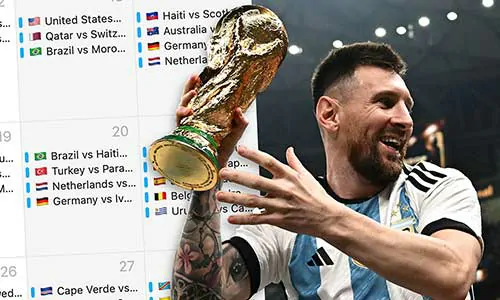
The roadmap to the historic FIFA World Cup 2026 is officially set, ushering in an unprecedented era for global football. Hosted jointly by Canada, Mexico, and the United States, this tournament represents the largest and most complex international football calendar ever designed. As the tournament approaches, domestic leagues and international confederations must align their schedules to accommodate a massive 48-team format. Every time a major tournament of this scale approaches, fans and pundits debate how new performances will alter the legacy of the elite Ballon d’Or Winners Ranked throughout football history. A player’s performance in this congested calendar will directly influence where they stand among the legendary Ballon d’Or winners ranked by global experts.
For players, coaches, and supporters, navigating this dense calendar requires a clear understanding of key milestones, international windows, and tactical demands. Consequently, this comprehensive guide breaks down the complete FIFA 2026 schedule, domestic league adjustments, and the immense physical challenges players face. Furthermore, we analyze how the outcome of this historic tournament will inevitably redefine individual football legacies and awards across the globe.
Table of Contents
- 1. Understanding the FIFA 2026 International Football Calendar
- 2. Key Dates and Milestones in the 2025-2026 Season
- 3. How the 2026 Calendar Affects Ballon d’Or Winners Ranked
- 4. Historical Impact of World Cup Campaigns on Ballon d’Or Winners Ranked
- 5. Continental Qualifiers and Domestic League Adjustments
- 6. Predicting the Next Ballon d’Or Winners Ranked After the 2026 Tournament
- 7. Travel and Logistics: The North American Challenge
- 8. Frequently Asked Questions (FAQ)
1. Understanding the FIFA 2026 International Football Calendar
The expansion of the World Cup to 48 teams has fundamentally altered the structural framework of the international match calendar. Previously, a 32-team tournament consisted of 64 matches played over approximately 30 days. In contrast, the 2026 edition will feature 104 matches played over an extended 39-day period. This expansion introduces a brand-new Round of 32 knockout stage, meaning that finalists must now play eight matches instead of the traditional seven.
To accommodate this expanded schedule, FIFA has established a strict regulatory release period beginning on May 25, 2026. This mandate ensures that national teams have sufficient preparation time before the opening match kicks off on June 11, 2026, at the legendary Estadio Azteca in Mexico City. For players aiming to be mentioned alongside the ultimate Ballon d’Or winners ranked by historical impact, pacing themselves through this demanding calendar is essential.
Additionally, the transition from club duty to the national team environment requires careful synchronization between domestic associations and continental governing bodies. This coordination is overseen by the official UEFA portal and other regional confederations to ensure that domestic tournaments conclude on time. Consequently, the margins for error in scheduling have never been slimmer, making roster rotation a primary survival tool for elite clubs.
2. Key Dates and Milestones in the 2025-2026 Season
The journey to the final at the New York New Jersey Stadium on July 19, 2026, requires a highly structured timeline. The international match windows leading up to the tournament provide crucial preparation periods for national team managers to finalize their squads. This intense pacing means that players who manage their physical load effectively will have a stronger chance of joining the ranks of the Ballon d’Or winners ranked by consistency.
Below is a detailed breakdown of the key dates shaping the international football calendar for the historic 2025-2026 season:
| Date Range | Event / Window Type | Scope & Significance |
|---|---|---|
| Sept 21 – Oct 6, 2025 | FIFA International Window | Continental qualifiers and critical group stage testing. |
| Nov 9 – 17, 2025 | FIFA International Window | Final competitive matches of the calendar year. |
| Dec 21, 2025 – Jan 18, 2026 | CAF Africa Cup of Nations | The premier tournament for African national teams. |
| March 23 – 31, 2026 | FIFA International Window | Final playoffs and inter-confederation friendly matches. |
| May 25, 2026 | Mandatory Squad Release | Clubs must release all selected players to national teams. |
| June 11, 2026 | World Cup Opening Match | Kickoff at Estadio Azteca, Mexico City. |
| July 19, 2026 | World Cup Final | Championship match in East Rutherford, New Jersey. |
3. How the 2026 Calendar Affects Ballon d’Or Winners Ranked
In the landscape of modern football, individual awards are heavily influenced by performance on the international stage. Historically, World Cup years have completely rewritten the ranking of individual accolades, shifting how we view the greatest Ballon d’Or winners ranked by their peak tournament years. Because of this, players who dominate the 2026 tournament will quickly rise up the ladder of Ballon d’Or winners ranked by international success.
The expanded 104-match format introduces a dramatic shift in how the Ballon d’Or is contested. On one hand, players have more matches to showcase their elite skills under extreme pressure. On the other hand, an early exit can severely hurt a superstar’s position when compared to previous Ballon d’Or winners ranked in previous decades. Physical endurance and mental fortitude over this grueling 39-day stretch will be the ultimate differentiating factors.
Therefore, the timing of the calendar means that traditional club performances in domestic leagues like the Premier League, La Liga, or Serie A will serve as a baseline, but the final verdict will be decided on North American soil. A legendary performance in the knockout stages of the World Cup will provide an insurmountable advantage in the race for the golden ball.
4. Historical Impact of World Cup Campaigns on Ballon d’Or Winners Ranked
If you examine the list of Ballon d’Or winners ranked by their international achievements, a clear trend emerges where World Cup champions always take precedence. For instance, Zinedine Zidane in 1998 and Fabio Cannavaro in 2006 cemented their legacy among the top Ballon d’Or winners ranked for single-tournament brilliance. Their exceptional performances on the world’s biggest stage overshadowed their domestic campaigns and earned them football’s ultimate individual honor.
Conversely, players who excelled only at the club level during World Cup years often find themselves lower among the Ballon d’Or winners ranked over time. The 2026 calendar offers a direct path to immortality for players who can replicate these historic campaigns. Performing under the eyes of billions of viewers changes the public and journalistic perception of a player’s career, establishing their position in the pantheon of footballing greatness.
5. Continental Qualifiers and Domestic League Adjustments
The unprecedented nature of the 2026 summer tournament has forced major domestic leagues to significantly compress their schedules. Leagues such as the English Premier League, German Bundesliga, and Spanish La Liga must start their seasons slightly earlier and minimize winter break periods. This structural adjustment is necessary to ensure that all domestic and continental club competitions conclude before the May 25 release deadline.
As a result, clubs must rotate their squads to protect the assets who hope to eventually see themselves on the historic list of Ballon d’Or winners ranked by major career honors. Roster depth will become the deciding factor for clubs chasing both league glory and continental success. Additionally, the intense league campaigns mean that physical resilience is just as critical as raw talent for anyone looking to stand among the Ballon d’Or winners ranked for endurance.
This dynamic also places significant strain on international qualifiers across different continents. Below are the primary adjustment strategies implemented by major confederations:
- UEFA (Europe): Group stages for qualifiers have been streamlined into smaller, more intense groups to reduce unnecessary matchday travels.
- CONMEBOL (South America): The grueling 18-match round-robin system is scheduled with optimized double-header windows to limit transcontinental flights.
- CONCACAF (North America): As the host nations are automatically qualified, other regional contenders face a revamped format to claim the remaining spots.
6. Predicting the Next Ballon d’Or Winners Ranked After the 2026 Tournament
With the 2026 cycle in full swing, analysts are already attempting to forecast how the new wave of talent will fit into the registry of Ballon d’Or winners ranked by generation. Younger superstars like Erling Haaland, Kylian Mbappé, and Jude Bellingham are poised to lead this new era. If Jude Bellingham or Kylian Mbappé leads their country to glory in July 2026, they will immediately earn a high placement among the Ballon d’Or winners ranked by peak performance.
Therefore, the tournament will not only crown a world champion but will permanently alter how modern Ballon d’Or winners ranked alongside historic figures. The added physical demands of the eight-game path to the trophy mean that the player who carries their team to victory will have achieved one of the most physically demanding feats in sports history. This achievement will undoubtedly dominate the voting ballots for years to come.
7. Travel and Logistics: The North American Challenge
One of the most complex aspects of the FIFA 2026 calendar is the immense geographic spread of the tournament. Spanning across three massive nations and multiple time zones, teams will be subjected to rigorous travel schedules. A team could play a group stage match in the humid climate of Monterrey, Mexico, and then fly thousands of miles to the cooler, coastal environment of Vancouver, Canada, for their next fixture.
Managing this intense physical toll is the hidden key for any superstar wishing to enter the elite list of Ballon d’Or winners ranked by modern era achievements. Squads that utilize advanced sports science, Cryotherapy, and sleep synchronization will have a distinct competitive advantage. Consequently, the team that manages logistics and recovery most effectively is the team most likely to lift the trophy in New Jersey.
In conclusion, the FIFA 2026 calendar represents a revolutionary shift in the landscape of international football. With 48 teams, 104 matches, and three host nations, the path to glory is longer and more demanding than ever before. Ultimately, the upcoming tournament represents more than just a quest for a trophy; it is a battleground that will define the modern Ballon d’Or winners ranked across history. As the countdown to June 11, 2026, continues, the football world prepares for a spectacle that will shape the sport for generations to come.
What are your predictions for the historic tournament? Join the discussion in the comments below, and don’t forget to share this ultimate guide with your fellow football enthusiasts!
Frequently Asked Questions (FAQ)
Q1: Will the tournament influence who is listed among the Ballon d’Or winners ranked of this decade?
Yes, historical trends show that World Cup years overwhelmingly dictate individual awards, meaning the tournament will heavily reshape how Ballon d’Or winners ranked of this era are evaluated.
Q2: When does the FIFA World Cup 2026 start and end?
The tournament officially begins on June 11, 2026, with the opening match at the Estadio Azteca in Mexico City, and concludes with the final match on July 19, 2026, at the New York New Jersey Stadium.
Q3: How many teams are participating in the 2026 World Cup?
A record-breaking 48 teams will participate in the tournament, expanding from the previous 32-team format used since 1998.
Q4: What is the mandatory release period for players in the 2026 calendar?
FIFA has mandated that all clubs must release their selected international players to their respective national teams starting on May 25, 2026.
Q5: How many matches will be played in total during the tournament?
There will be a total of 104 matches played over 39 days, featuring a newly introduced Round of 32 knockout stage.
Q6: How does the new format affect the number of matches played by the finalists?
Teams that reach the semi-finals and finals will play a total of eight matches instead of the traditional seven due to the added knockout round.